
Guard frequency in the age of social media
Air Facts Journal
Yes, this is an “old man yells at cloud” article. Yes, I can already hear the jokes about the “guard police.” I don’t care. It needs to be said: Guard frequency (121.5) has become a national embarrassment, a sign that our self-absorbed social media culture has spread to the once-boring world of aviation. We need to do better.
If you follow the advice of the Aeronautical Information Manual—and you should—then monitoring 121.5 is a required part of every flight. This frequency is used for all kinds of critical tasks, including military intercepts of airplanes that bust TFRs. But these days most of what you hear on Guard is far less important: bad jokes, pilots mocking one another, and animal noises.
For newer pilots, I can assure you it wasn’t always this bad. In fact, for decades the only pilots who listened to Guard were conscientious airline pilots and Civil Air Patrol cadets. You might occasionally hear a lost pilot or an ELT, but that was it. This relative quiet was shattered (like so much else) by the terrorist attacks of September 11, 2001. Almost overnight everyone, from airline captain to student pilot, was on frequency. It was required, first by FDC NOTAM and then by AIM section 5-6-2 . For a few years it was fine—nerves were frayed so people took it seriously, and many pilots realized there were benefits to having more ears listening.
Then came the second defining event of the century, not as tragic as 9/11 but equally significant: the introduction of social media. In addition to making Americans hate each other and ruining our attention spans, apps like Instagram, Twitter, and TikTok also turned everyone into their own “brand.” We all started performing for the crowd, and in the process we all got a little more selfish, a little more eager to win praise from strangers.
In this cutthroat world of going viral and canceling people, Guard has morphed into a comedy show with national distribution, or at least an audio version of the YouTube comments section. When an airline pilot accidentally makes their cabin announcement on guard, we could gently remind the pilot they hit the wrong switch. Instead, you can expect to hear at least half a dozen jokes (“which gate are we parking at?” or “you’re on guard; no you’re on guard!”). This takes up airtime and is never as funny as the anonymous commenter thinks it is.
Then there are the pilots who play random sound effects and music into their microphones. Or the ones who make the same tired jokes about Delta pilots and turbulence PIREPs. Or, worst of all, the meowing. Make. It. Stop.
If you think I’m just a humorless Gen Xer who is mad that “kids these days” are having too much fun, I can assure you I’m no purist when it comes to radio etiquette. I don’t say “tree” and “fife” and I have been known to talk on 123.45 when flying in formation for a $100 hamburger. I’m also not against having fun in the air—in fact, it’s why I fly in the first place.
But there is a cost to all this goofing off, ranging from minor to critical. Consider the following scenarios, all of which I’ve heard in the last five years, all of which were at least somewhat disrupted by the Guard comedians:
- A pilot in a remote part of West Virginia trying to relay an IFR flight plan cancellation to another airplane.
- An airline pilot searching for the right ATC frequency, and struggling to hear the right numbers from another crew.
- A new pilot, lost and increasingly panicked, trying to get help as night crept in.
- A pilot listening for an ELT from a crashed airplane (at the request of New York Center).
It’s funny when one person makes a joke, but when everyone does it we destroy the shared resource that is 121.5. Economists would call this the tragedy of the commons, but Aristotle said it best: “That which is common to the greatest number has the least care bestowed upon it. Every one thinks chiefly of his own, hardly at all of the common interest.” It applies to aviation just as well as Ancient Greek politics. Heaven forbid someone tries to say “Mayday” while a pilot is relaying the latest NFL score.
Sometimes it’s not a catastrophic risk to safety, just a minor annoyance that can lead to distraction. About a month ago, I was landing at a Class C airport located very close to a large college football stadium where a TFR was active. Naturally, I had 121.5 tuned in the #2 COM radio while I listened to tower on #1. The weather was good, but the sun was setting and there was a stiff crosswind, so I was working pretty hard on final. Just as I was wrestling the Cirrus into a flare, the Guard jokes erupted. It was a terrible time for a distraction, especially when the tower frequency was active as well. While the landing turned out perfectly fine, it was just another reminder of how many pilots are impacted by bad behavior (when you’re transmitting from FL350, those radio calls go a long way).
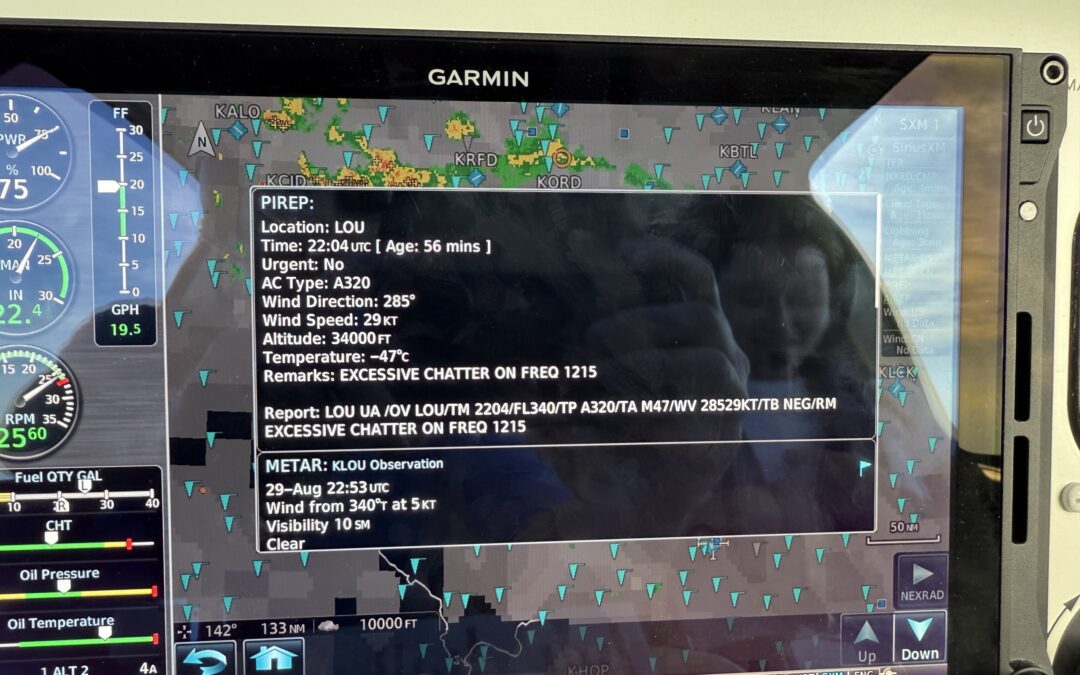
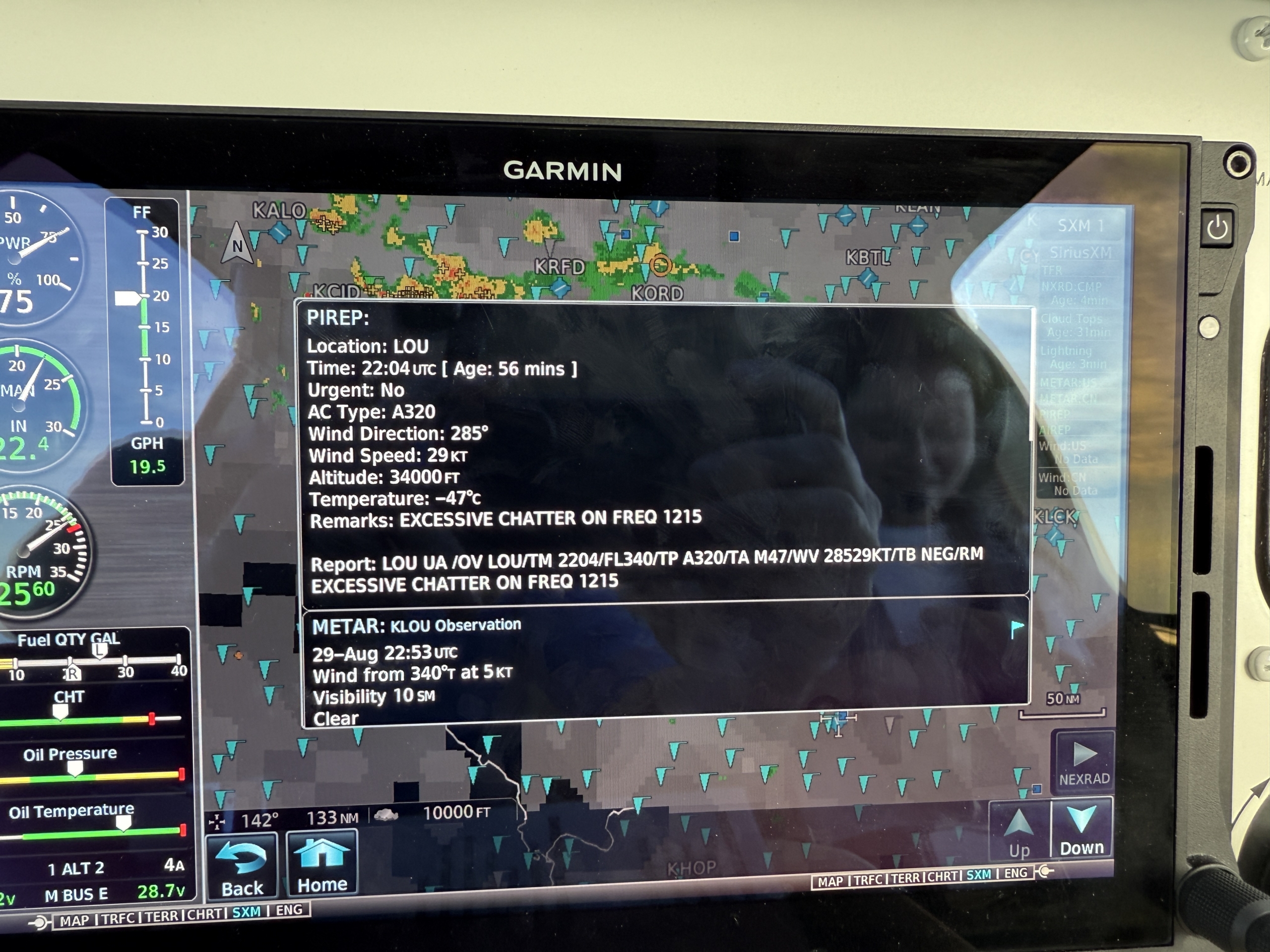
Lest you think I’m alone on this crusade, here is a PIREP that was posted shortly after my landing:
The answer is pretty simple: don’t make nonessential calls on Guard, and don’t tolerate it from others in your airplane. Flight instructors should teach their students what 121.5 can and cannot be used for, and stop passing on bad habits to the next generation of pilots. Airline and corporate pilots don’t need to be tyrants like the captains of decades past, but they should tell their colleagues to shut up and read the airplane manual if they’re bored. Discipline is one of the most valuable traits for a pilot, and it definitely applies to radio communications.
If you do have a pithy comment, you don’t have to share it with the whole world—say it to the other pilot instead of pushing the PTT button. Or you could always post it to your favorite social media app once you’ve landed. Maybe you’ll go viral…
The post Guard frequency in the age of social media appeared first on Air Facts Journal .