
The Starlink era is here—will we regret it?
Air Facts Journal
The dawning of a new technological era is rarely apparent in real time. Sorry to say, in spite of what you read on LinkedIn or watch on YouTube, every press release does not constitute a revolution. Having said that, March 18, 2025 felt like the beginning of something important.
That was the day Starlink, the satellite internet company owned by SpaceX, announced a price cut of more than 50% for their most popular in-motion subscription plan (to $65/mo.), at the same time they raised the maximum speed to 350 mph. That new plan, when combined with the portable Starlink Mini hardware kit ($499), means pilots can finally have high speed internet access in flight, without large external antennas or prohibitively expensive monthly fees. Not coincidentally, March 18 was also the day my phone started buzzing with texts and emails, as dozens of pilots I know asked about how to get started with Starlink . If this anecdotal sample is any guide, pilots have noticed the news.
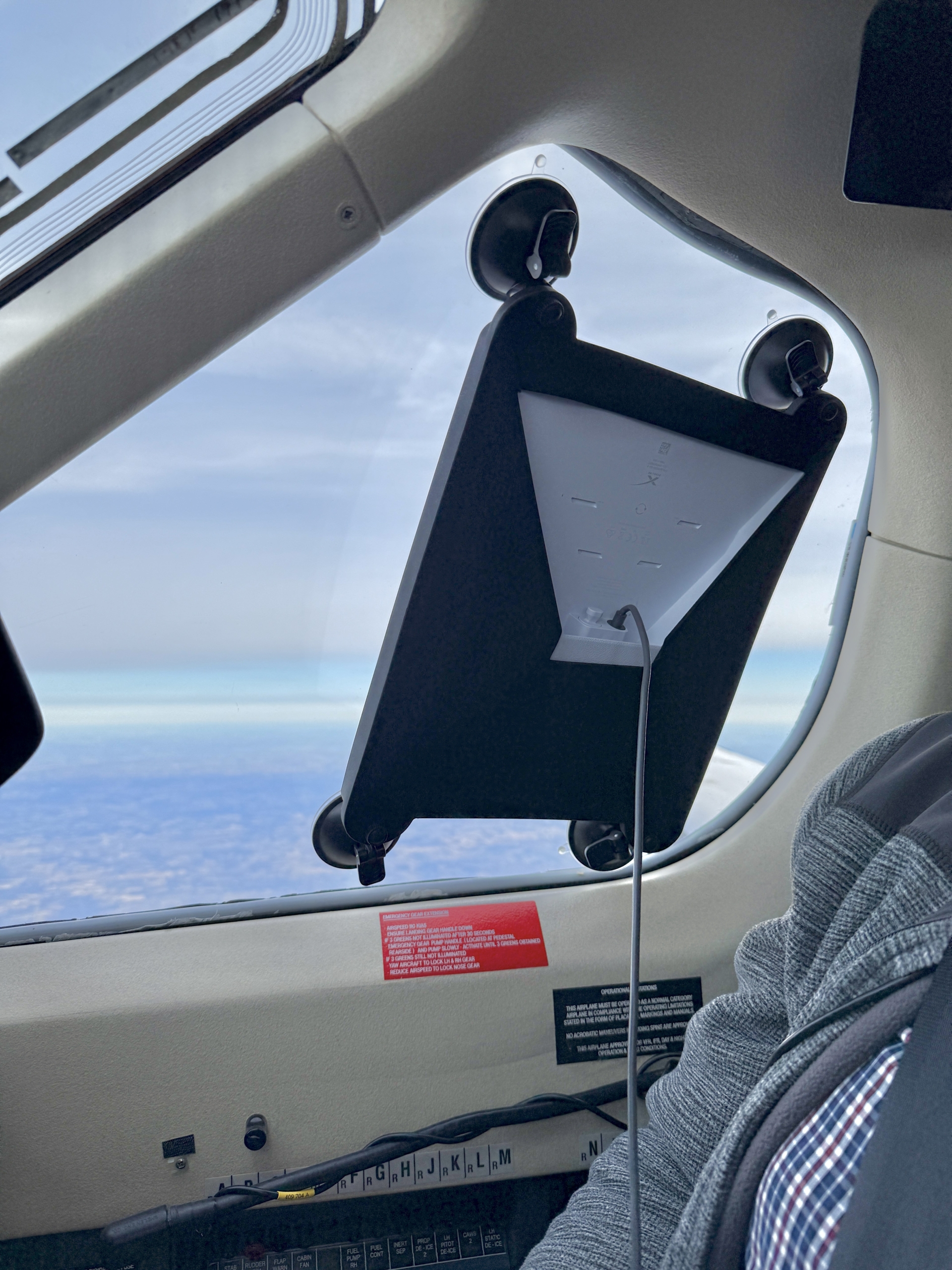
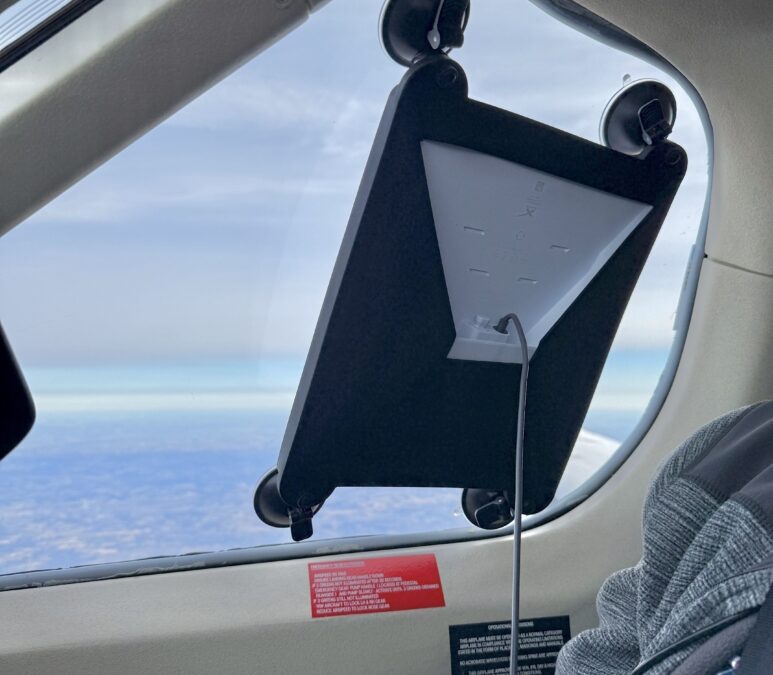
Starlink Mini isn’t exactly tiny, but it can be mounted in most GA airplanes.
The system is hardly perfect. The Starlink Mini antenna is still a little large and can be tricky to mount safely. It requires more power than most cigarette plugs and even panel-mount USB ports can put out (larger battery packs work well, though), and it’s certainly not made specifically for aviation. But it works reliably in everything from a Cherokee to a King Air, and requires no special software for any mobile device you have. I’ve flown with it on multiple cross-country trips and can tell you it’s like having full-speed home Wi-Fi on your airplane, all over the US and at all altitudes.
This promises to be a major advancement in cockpit technology, with benefits for pilots and passengers alike. But before diving headfirst into the Starlink pool, it would be wise to pause for just a moment and contemplate what we might lose. Don’t worry, I’m no Luddite and I’m not here to scare anyone away from an exciting new gadget. I am, however, an observer with enough experience to have seen technological breakthroughs bring unintended consequences. I fear that may happen here.
Imagine the possibilities
First, the positives, because there are many. With a high speed internet connection, pilots are able to access essentially any weather product that’s available on the internet, including full resolution radar (from non-aviation sites), one-minute old METARs (available at some airports but not sent through to FAA data streams), and even live weather cameras (increasingly common in the Lower 48 and quite handy on IFR days). This can be combined with non-weather data for smarter decision-making. Trying to find a gap in a line of weather? Pull up FlightAware and see where everyone else is going.
In addition to receiving more data, pilots are also able to transmit information, a major change compared to traditional one-way services like ADS-B and SiriusXM. I would love to submit PIREPs, perhaps even with photos, instead of tying up the ATC frequency (apps like Virga already offer such features). This could dramatically improve the weather picture for other pilots and remove some of the bias inherent in today’s system, where only bad weather gets reported. Or imagine talking to experts on the ground, much like airline pilots do with dispatch: you might send a picture of erratic CHT readings on your engine monitor to your A&P, or text an experienced flight instructor about the weather up ahead.
Of course these examples only affect the pilot. There are also countless benefits for passengers—which should not be underestimated. If our passengers are happier taking long trips, perhaps because they can scroll through social media or keep up with their work, they very well might fly more often with you. That’s hardly a bad thing.
Beyond these obvious uses, I suspect Starlink will help in ways we can’t even imagine yet. As some analysts have noted, it was easy to imagine we would get mobile email when Apple introduced the iPhone in 2007; nobody could envision Uber or Instagram. Likewise, I expect smart people will invent all kinds of products and services to make Starlink even more useful for pilots and passengers.
And yet, lurking in the background are two concerns that I can’t quite shake.
Don’t ignore safety concerns
The wet blankets of the aviation community will quickly remind us of the potential risks of flying with a full internet connection. My reflexive answer to these people is “lighten up,” because they probably opposed the nose wheel and GPS when they first came out. But even the most ardent tech enthusiast must admit that, at least in this case, they do have a point.

We’ve all seen it—now imagine it on short final with Starlink.
It’s easy to imagine reading the NTSB report about an influencer on YouTube or Instagram who crashed while livestreaming on final approach (“Can I land in a 40-knot crosswind? Ride along and find out!”). Kids these days, right? Unfortunately, it’s not just a youth problem: consider the hard-charging businessman who was trying to close a deal at 8000 feet and didn’t notice the ice building up on his wings. If this sounds far-fetched, just watch some videos of people walking into glass doors or light poles while staring at their phones. For an aviation example, remember the airline pilots (way back in 2009) who were so caught up in “discussing the pilot schedule” on their laptop that they overflew their destination. Loss of focus can happen, and it’s insidious.
Attention is a scarce resource in life today, and flying light airplanes requires a lot of it. If a pilot’s use of Starlink is undisciplined, he can quickly trade a valuable safety tool for a dangerous distraction. I predict someone will do something colossally stupid early on, and the FAA will make an example of them. I hope it does not spur new FARs that restrict this potentially lifesaving technology, but it’s certainly possible.
What else might we lose?
Overall, I’m optimistic when it comes to safety. Autopilots, glass cockpits, and yes, even the nose wheel led to some erosion of old school pilot skills, but with an accompanying increase in overall safety. The accident record over the last 20 years has proven this in compelling detail—for every crash caused by slavishly following the magenta line, three or four others were prevented by the same avionics. I suspect Starlink will follow a similar path, with a few notable accidents that elicit much head-shaking, but unimagined benefits that more than offset these few exceptions.
I am much less optimistic, however, about the effects of connectivity on pilots’ state of mind, especially the loss of temporary isolation that only small airplanes can provide. While it’s occasionally frustrating to be cut off while cruising along in your Cessna or Bonanza, it’s also the last sanctuary for most of us in an increasingly distracted world. Can you imagine sitting still for two hours without the internet anywhere else besides an airplane?
Most Americans would answer no. To take just one depressing example, a 2014 study found that 67% of men would rather endure an electrical shock than be bored for 15 minutes. Apparently little has changed from the 1600s, when French mathematician Blaise Pascal memorably wrote, “All of humanity’s problems stem from man’s inability to sit quietly in a room alone.”
I didn’t learn to fly so I could be alone with my thoughts, but I quickly discovered it was a nice side benefit. Flying forces you to leave your everyday worries on the ground and focus on the job of pilot in command, the way a good book or concert can make the outside world disappear temporarily. Antoine de Saint-Exupery called it the “lighthouse-keeper’s isolation,” a beautiful way of describing both the loneliness and the gravity of the pilot’s job when he starts the engine. That has never been more valuable than it is today, when our brains have been rewired by constant dopamine hits from our smartphones. I often come back from a flight feeling refreshed and exhilarated in a way that’s hard to describe to non-pilots.
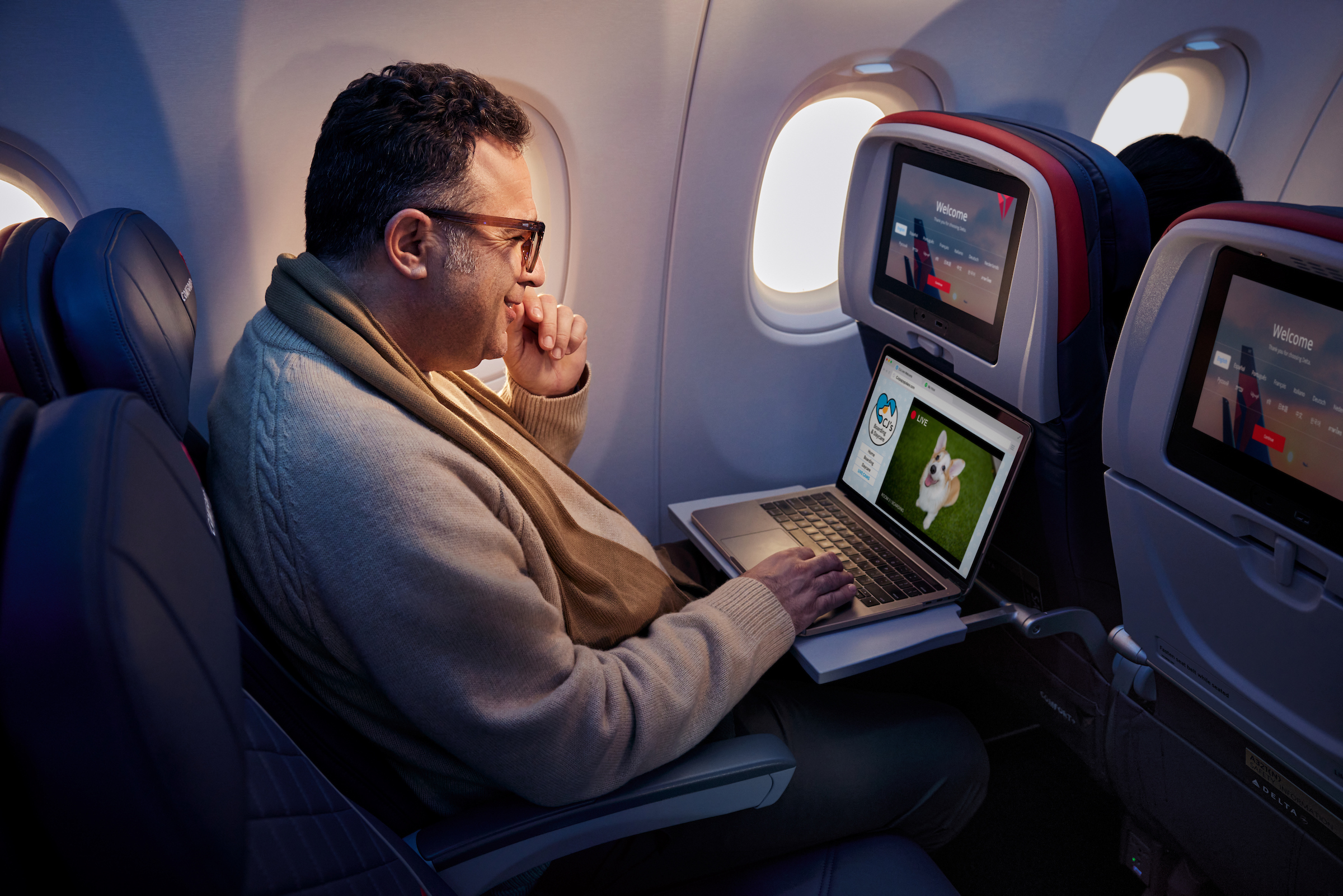
Do airlines even need windows anymore?
If this all sounds like a curmudgeon complaining about change, I confess there is a resemblance, but for a preview of how this might go just think about the last airline flight you took. For me, I saw a plane load of 185 people close every single window shade before even leaving the gate (I was on the aisle, so could not engage in an act of civil disobedience). There was hardly a whiff of curiosity about the outside world flying by at 500 mph. What could lure everyone away from a stunning view of the Florida coastline as we enjoyed one of modern man’s most incredible inventions? The side of the 737 was painted with a big logo advertising “Fast, Free Wi-Fi.”
I sure hope that shades-down mentality doesn’t happen to GA pilots.
The answer is not to shun in-flight connectivity, but to think about what you want from the technology before you start flying with it, much like parents are starting to do with social media and their children. Regardless of any new regulations, we should all create our own standard operating procedures for flying with Starlink—sterile cockpit rules for the connected airplane. For example, no texting, emails, or other nonessential work below 10,000 feet in a turbine airplane or within 25 miles of the airport in a piston airplane seems like a minimum rule. A standard briefing for passengers about when and how to use their devices would also be smart. Finally, I’d love to see EFB apps create a “Starlink mode” that enables only in-flight data, like weather or PIREP submissions, without allowing less important features like updating chart databases. The specific SOPs will vary from pilot to pilot and airplane to airplane; the essential step is to have some habits in place before you go flying with it for the first time.
An even simpler idea is to schedule a tech-free flight once in a while, one where you turn off the autopilot, Starlink, and maybe even the GPS, and remember how to look out the window. This is a great way to refresh your stick and rudder skills, practice old fashioned situational awareness, and (no less importantly) have fun. That is why most of us fly, isn’t it?
The post The Starlink era is here—will we regret it? appeared first on Air Facts Journal .