
Who is the pilot in command of your aircraft?
Air Facts Journal
“The pilot in command of an aircraft is directly responsible for, and is the final authority as to, the operation of that aircraft.”
FAR 91.3 is one of the simplest and best known federal aviation regulations, and it clearly defines the most essential job as a pilot: to be the boss for the entire flight. But as obvious as this sounds, it’s surprisingly hard to do in the real world. That’s especially true for instrument pilots, where Air Traffic Control sounds like they are running the show, the avionics seem to direct the flight along predefined routes, and the autopilot actually flies the airplane. Little by little, your authority as PIC can be eroded until no one is actually in command.
Consider the following accident report, a representative one picked mostly at random, which recounts how the pilot of an A36 Bonanza got behind the airplane, lost situational awareness, and ultimately crashed on an RNAV approach. There were probably many mistakes here, from lack of avionics knowledge to poor situational awareness, but the real question is: was anyone pilot in command?
“The instrument conditions, likely turbulence, and increased workload imposed by beginning the approach phase of the flight presented a situation that was conducive to the development of spatial disorientation and a loss of situational awareness. Given that the pilot maintained a position east of the final approach course for most of the approach and far below the minimum published altitude throughout the approach, it is likely that he had lost situational awareness of the airplane’s position. No information was available to determine the modes or settings of the avionics and/or autopilot during the approach. Whether the pilot’s familiarity with the relatively new avionics and their interface with the autopilot contributed to the accident could not be determined based on the available information.”
The pilot in the left seat
As that accident shows, being PIC is a full time job. But what does that really mean, beyond the 23 words in FAR 91.3? A great place to start is with the holy trinity of aviation—aviate, navigate, communicate. These categories apply whether you’re flying a Cub on a summer evening or a business jet on an RNAV approach. They aren’t just a list of priorities in an emergency, they also neatly sum up the different roles a pilot must play, roles that used to be divided very specifically on the flight deck of an airliner.
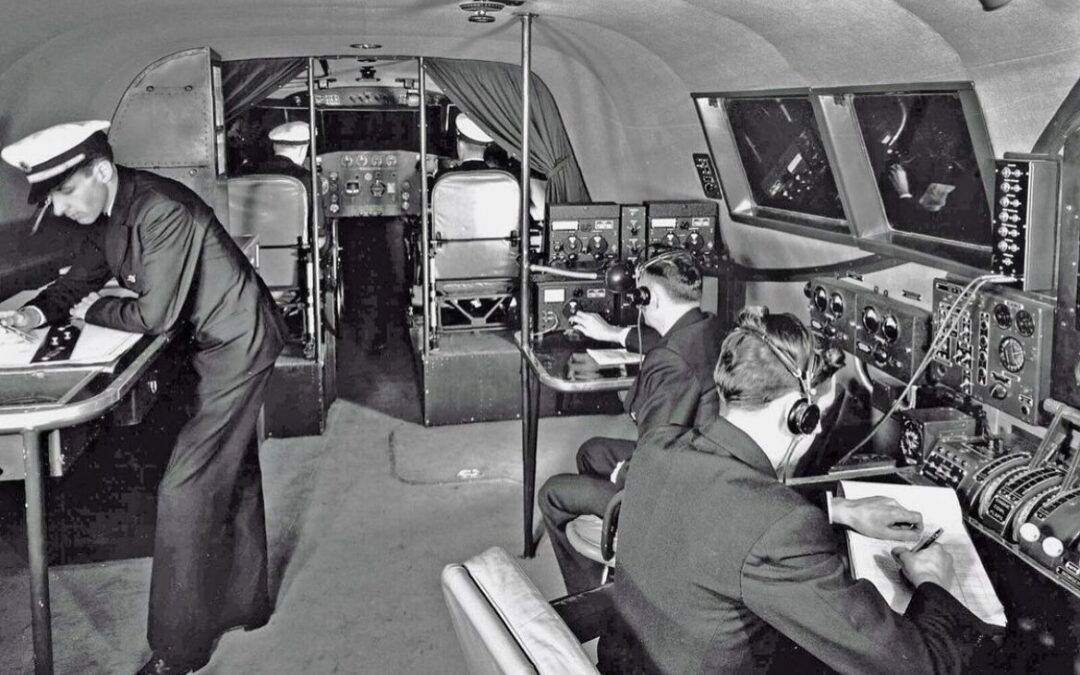
Consider the amazing picture below, taken on the flight deck of a Boeing 314 flying boat over 80 years ago. There is a captain (PIC), a first officer (aviate), a navigator (navigate), a radio operator (communicate), and even a flight engineer (responsible for managing the engines).
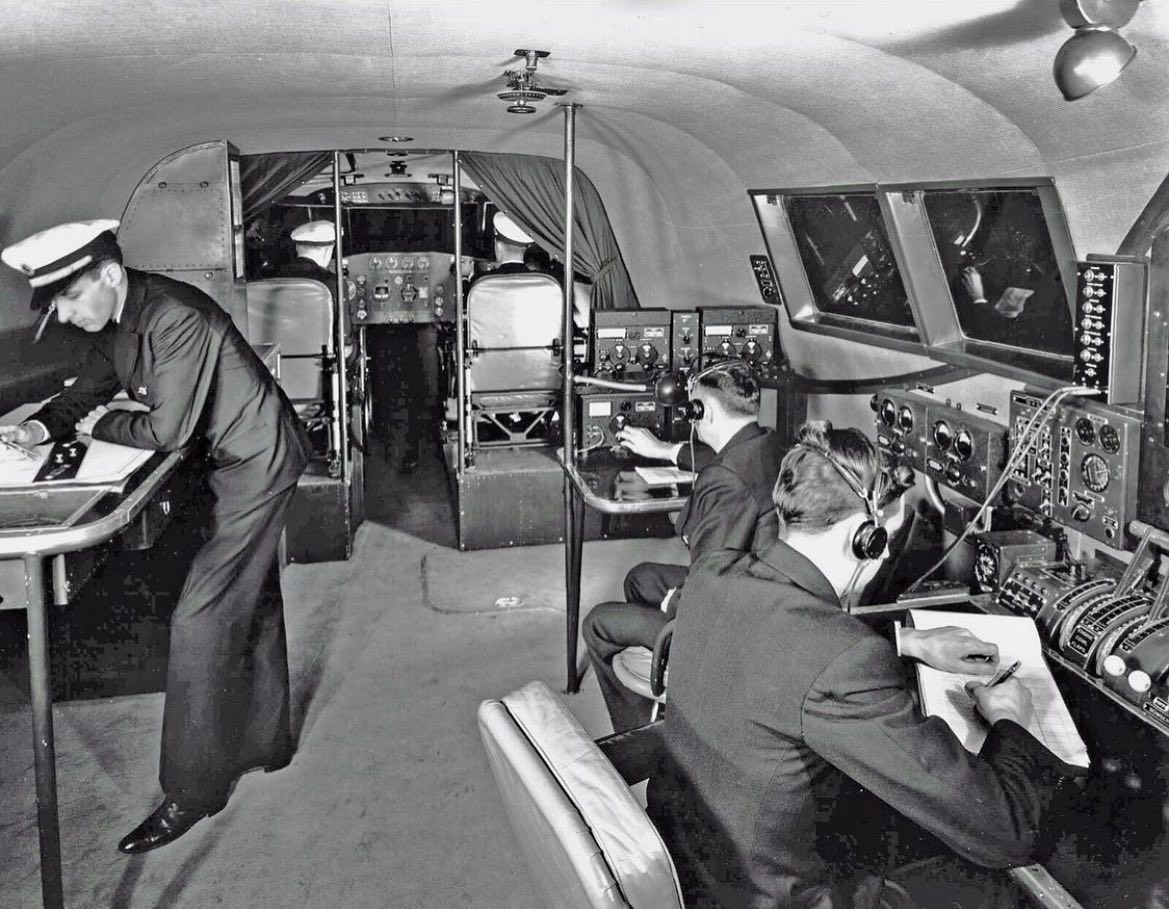
In the cockpit of a modern GA airplane, there is probably only one person to do all of these jobs—you! Fortunately, you have much more technology than the captain of that Clipper: the first officer has been replaced by an autopilot, the navigator has been replaced by a GPS, the radio operator has been replaced by modern VHF radios with push-to-talk switches and ANR headsets, and the flight engineer has been replaced by digital engine instruments. These digital flight crew members never get tired or need fresh coffee, they don’t have personalities to manage and they have access to much better information. But they also have no situational awareness and no idea how their little world fits into the broader mission.
When I’m cruising along on a single-pilot IFR flight, I like to think about that picture and remind myself that while technology has taken away four of those jobs, it has not and will not take away the job of the captain sitting in the left seat. It’s up to me to monitor my crew (most of them go by “Garmin”) and make sure they are doing exactly what I want them to do. Maybe we need to add a new word to the famous three-word phrase: aviate, navigate, communicate, then delegate.
Aviate, navigate, communicate
To be an effective captain in a digital cockpit, you need to understand ”aviate, navigate, communicate” beyond its classic meaning. More than just a list of negatives (don’t crash, don’t get lost, don’t lose contact), it describes a mental approach to flying that includes multiple levels of proficiency.
Aviate means, first and foremost, keeping the airplane under control. On an IFR flight that starts with basic attitude instrument flying. This is a fundamental skill, and nothing else matters if you fail at it. Sadly, as I’ve written before , this is a leading cause of IFR accidents because it’s the first skill to go when pilots start to lose currency. Quite simply, your first goal as an instrument pilot is to never lose the ability to hand-fly the airplane on raw data if needed. That might be exactly what the Bonanza pilot above needed to do.
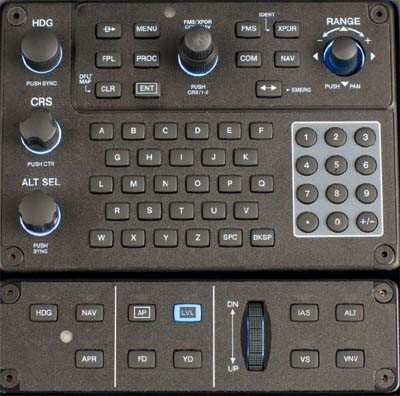
These days, “aviate” means knowing your autopilot inside and out.
There’s a second level of aviate for modern pilots, though, and this involves autopilot proficiency. Autopilots are neither a savior nor a curse; they are simply a fact of life these days, and a major safety enhancement if used properly. “Used properly” is the key part—you need to know much more than just heading mode. What lateral and vertical modes are available? Where are status messages displayed? What’s the difference between an armed mode and an active mode? Perhaps most importantly, do you understand the different levels of automation, from yaw damper to flight director to fully coupled, and do you know how to move quickly between levels?
A good test is to go flying (with a safety pilot) and, before pushing a button on the autopilot or flight director, say out loud what you are trying to do and what you expect the autopilot to do once engaged. Make sure your expectations match reality before you blast off on a single-pilot IFR flight. And when you do, remember that even with the autopilot flying (your digital first officer), you are still pilot in command. George works for you.
Navigate these days is mostly about learning to use the avionics, because nobody gets lost anymore—unless they are lost in their glass cockpit’s menus. Proficient and fast avionics use is an absolutely essential skill in 2025, not a nice-to-have bit of aviation trivia. If you can’t operate your avionics at a very high level then you are not a proficient pilot. For instrument pilots, this means knowing how to load procedures (arrivals, departures, approaches) in all their various forms plus the finer points of approaches (which minima line applies) and how to modify them on the fly. Mastering this requires practice in the airplane, but don’t underestimate how much you can learn from a video or a simulator app. Book work and sim time really do pay off.
Navigate also means managing weather, because that’s often the biggest challenge on an IFR flight. We no longer need to worry about identifying VORs and dialing in the right radial, but we do need to worry about that thunderstorm sitting right on top of our direct route or the low ceiling at our destination. Understanding weather theory and mastering technology like datalink radar is important, but so is the ability to maintain a big picture view of your flight: how does the weather affect your desired route and ATC’s priorities? Fitting these pieces together is the key to a smooth and efficient IFR flight, and again, your avionics are not qualified to do this job.
Communicate sounds self-explanatory, and it mostly is. Being able to communicate clearly and efficiently is always helpful in aviation, but IFR flying makes it mandatory. Beyond the basics of getting a clearance and managing frequency changes, IFR communications requires a degree of self-advocacy and even negotiation skills. If you are headed for a thunderstorm, you can pretty much throw the pilot-controller glossary out the window—just tell the human on the other end of the mic that you need to do something different. The more experienced you get, the more you become willing to talk like a human on the radio.
That scenario leads directly into the second level of communications, which is less about talking on the radio and more about understanding the IFR system and how ATC works. If you know what to expect, you can be both more efficient (ask for the shortcut at the right time) and more polite (don’t make a stupid request). Reading the AIM is a good start, but there are a lot of details that mostly come from experience, so there is no replacement for getting out there and flying in it. Pay attention to details, like where you get handed off from approach to center, or why you always get a certain route when the weather is low. This can help you build a mental map of the IFR system around you, which reduces workload and keeps you ahead of the airplane.
What PIC means
What all three of these tasks have in common is that they are intentionally directed by the pilot in command. They do not just happen, they are planned and executed within the context of an overarching strategy. Doing this successfully requires pilots to develop some unnatural habits for humans: assessing the current situation with brutal honesty, evaluating multiple options quickly, and making tough decisions under pressure. These can never be outsourced to avionics or air traffic control, partly because they are not equipped to do the job but mostly because they have no skin in the game. Remember, it’s you who will pay the price for a mistake, not the approach controller or the Garmin circuit board.

If Bob Buck could fly needle, ball, and airspeed then surely we can keep the blue side up with a G1000?
That sounds like a lot of work, and it certainly can be when the radio is alive and the weather is bad. Is it all worth it? I think so. If you remain PIC, you can experience the pure joy of instrument flying, which I believe is the most rewarding thing you can do in an airplane.
Bob Buck, who would certainly be on the Mount Rushmore of aviation if there ever were one, brilliantly describes the stresses and rewards of instrument flying in his book The Pilot’s Burden. On the one hand, Buck shows how far aviation has come—after all, he is writing about flying an open cockpit Pitcairn biplane in IMC, as one of the first dozen or so people to have ever done it—but on the other hand, these paragraphs could easily have been written yesterday:
“I knew I had to get the needle centered, the ball back where it belonged, to survive. I concentrated as never before, and the airplane tracked true as the altimeter hand crawled upward.
At 3000 feet I leveled off, set cruise RPM, and moved back a bit from the edge of the seat. Then a strange thing happened. The tenseness subsided, and I felt quite at ease, with an unexpected feeling of security. I wasn’t down there ducking obstructions, trying to see through poor visibility, sticking my face out into the stinging rain, straining for vision; no, I was flying high, relaxed, and feeling protected.”
That “feeling of security” is a strange but powerful sensation when you first experience it while flying through a cloud. I would compare it to the best runner’s high (for better or for worse, I am unable to compare it to drug-induced highs), and it makes all the long instrument lessons worthwhile. Just don’t feel too secure, because that’s when complacency can set in. Next thing you know it, you’ve stopped being PIC.
On the other hand, you shouldn’t get too excited either, as Buck apparently did after exiting IMC:
“I’d flown out of the weather! What an exhilarating feeling! I did a loop and at the top went into the clouds for an instant and then rushed down the backside into clear air again.”
At least you could say Bob Buck remained pilot in command the whole time. That, if not the loop, is a great lesson for instrument pilots in the 21st century.
The post Who is the pilot in command of your aircraft? appeared first on Air Facts Journal .