
The pros and the cons: Cirrus SR22
Air Facts Journal
A note on the title: Last time I wrote about a particular airplane (the Cessna 210 ), I titled it “Why I love it, why I hate it.” In spite of my generally positive comments about the big Cessna single, some readers were outraged by the word hate. So, in an effort to be more precise (and avoid conflict in the comments), this edition focuses on pros and cons. Regardless of personal feelings, every airplane—no matter how much you love it or hate it—is a compromise. That’s what we are exploring here.
Cirrus had a controversial reputation early on, and to this day it’s the butt of some jokes. But it’s also the best selling piston airplane in the world for 20 years straight, a lone bright spot among small airplane companies who otherwise seem to be surviving on a few big flight school orders. And as I’ve repeatedly observed, the most vocal Cirrus critics are usually the ones who have never flown one.
So let’s look at the facts regarding the SR22, of which nearly 8,000 examples are now flying. Richard Collins memorably wrote about Cirrus pilots in previous articles—both what they do wrong and what they do right —but here I’ll focus on the airplane. What’s good about it and what’s innovative? What’s disappointing about it and what tradeoffs had to be made? Note that I’ll focus on what is unique to the SR22. Hot starts are a pain for all fuel injected engines and all airplanes are expensive, so I’ll spare you those rants.
I am hardly a Cirrus expert, but after flying one for the last seven years I do have some opinions. As they say, your mileage may vary.
Pros

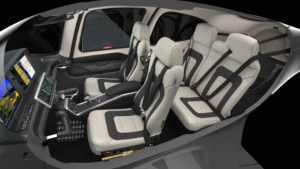
If the interior of a Cirrus feels like a luxury car, that’s no accident.
I’ll lay my card on the table right at the start: this airplane has a lot more to love than hate. I learned to fly in Cessna 172s and logged my first 1000 hours almost exclusively in 172s, 182s, and 210s, so I might have wrinkled my nose at the newfangled Cirrus airplanes when they first came out. Once I sat in an SR22, though, I realized it wasn’t all marketing hype. Once I flew one on a real trip, I understood why they sold so well. It is the airplane most airplane manufacturers are chasing in 2025.
It’s capable. Any discussion of the SR22 has to start with its overall performance. It doesn’t set any records here, but it’s an excellent all-around performer, especially for trips between 200 and 500 miles. Even the normally aspirated version (which is less popular than the turbo) climbs to 11,000 feet pretty easily, where it will cruise at over 160 knots on less than 15 gallons per hour. Turbocharged models can comfortably top 180 knots or even 200 knots if you climb into the flight levels, and with its ubiquitous TKS deice systems, climbing to those altitudes is possible year round. That makes the SR22 probably the premier traveling machine in GA right now, doing many of the trips that Cessna 310s and Bonanzas did 30 or 40 years ago. Just open up FlightAware and see how many Cirrus are flying, all over the country in all kinds of weather.
Passengers love it. This one is blindingly obvious, but perhaps for that reason some macho pilots pretend this is a weakness, as if “real pilots” prefer to endure pain when they fly. I think that’s ridiculous, and Cirrus should be celebrated for delivering a four-seat cabin that set a new standard in GA. It just feels right, with comfortable seats and plenty of creature comforts (yes, it even has cup holders!). The back seat in particular is surprisingly roomy, but even the front right seat is a great place for a passenger to sit for three hours because of the side yoke and the lowered panel on that side. Then of course there’s the air conditioning, which is not standard but is found on the majority of SR22s. Sure, you don’t need that in a piston airplane, but I’ve never had a passenger complain about it—and when’s the last time you bought a new car without AC?
It’s surprisingly simple. For all its high performance, the SR22 is actually quite easy to fly. Compared to the Cessna 210, there is no gear lever, no cowl flaps, and no propeller control. The after takeoff checklist has basically one item: retract flaps. Compared to a piston twin like a Piper Aztec or Cessna 310, there is only one engine and no complicated fuel system to manage. And compared to the faster Columbia/Corvalis, the Cirrus is much easier to slow down and land. SR22 pilots certainly can (and do!) get behind the airplane, but I can’t think of an airplane of this size and speed that is simpler. Before you ask, the side yoke is a non-factor for me. After one flight I completely forgot it was different, probably because it’s really half a traditional yoke, not a stick.
The parachute. Yes, it matters and yes, it’s a good thing. The accident record now proves that, when trained and used properly, the Cirrus Airframe Parachute System (CAPS) is a net positive for safety. I have never used it and I hope I never do, but I could say the same for the fire extinguisher in the Cessna 182 I fly or the Smart Glide feature in the Pilatus PC-12 I fly. It’s another tool in the toolbox, and if it gives passengers an extra feeling of security, then who am I to argue—we want our family and friends to enjoy flying, don’t we? The only warning is to never let the parachute influence your decision making process. If you ever find yourself saying, “this flight is 50/50, but I’ve got the parachute in case something goes wrong,” then you’re doing it wrong. Now you’ve moved from smart preparation to moral hazard.

When it comes to avionics, integrated is often better.
The avionics are great. Cirrus has long been a leader in this category, essentially making glass cockpits the default in piston airplanes over 20 years ago, but they continued to add useful updates like terrain warning systems, digital engine monitors, and advanced autopilots through the years. What they do better than most is integrating the avionics, with features like a dedicated keypad and automatic flight data recording. This has led to some of those tired jokes (“what does a Cirrus pilot do when the autopilot quits? Pull the chute!”), but once again this sounds like envy. I love to fly a Citabria at 500 feet with the window open as much as any pilot, but in a high performance IFR airplane does anyone seriously want to fly without moving maps, datalink weather, and a good autopilot? There’s no Purple Heart for shooting an instrument approach to minimums without looking at an MFD. The market has proven this to be true, as Garmin continues to ship huge quantities of retrofit avionics that make a Cherokee look like a Cirrus, and even new LSAs sport integrated glass cockpits.
Cons
No airplane is perfect, as any owner or aeronautical engineer can tell you, and the SR22 is no exception. Many of its most innovative features require some tradeoffs, as you’ll see in the list below. To be clear, I don’t consider any of these cons to be deal breakers, but an honest assessment of the airplane must consider a few drawbacks.
No nose wheel steering. This is a minor issue, and the SR22 is hardly the only airplane without a steerable nose wheel, but for an airplane that can easily cost $1 million new it seems silly. Why should a 60-year old Cessna 172 have such a basic feature but not the top of the line 2025 airplane? The answer is undoubtedly weight, complexity, and cost—in order to create a fixed gear airplane (simple) that is still fast (performance), something had to be sacrificed and that was a steerable nose wheel. Taxiing the SR22 is certainly not hard after a few flights, but without practice it can lead to problems. See the next con.
The brakes aren’t great. Inattentive Cirrus pilots tend to ride the brakes while taxiing, which can lead to a jerky ride at best and occasional brake fires at worst (although this is a mostly problem on earlier SR22s that have not been retrofitted with better brakes). More significantly, runway performance on landing isn’t great. In fact, landing distance can sometimes be longer than takeoff distance, unusual for an airplane of this class. Landing a Cirrus on a 3000-foot runway is perfectly doable, but not if you land fast and long because the brakes will not save you from a bad approach. Once again, this is a classic engineering tradeoff: smaller wheels make it easier to cruise fast without having to retract the wheels, but it does reduce the braking performance.

Fixed gear and no cowl flaps are nice and simple, but there are tradeoffs.
No rudder trim. Like the lack of nose wheel steering, the lack of rudder trim has always bothered me. There’s a big, 300 horsepower Continental engine up front and it creates plenty of torque that needs to be offset in climb (which can take 25 minutes if you’re going high). Sure, there’s a yaw damper on most SR22s and that can mostly do the job, and sure, lack of rudder trim keeps the airplane simpler, but there is a hidden cost here. Specifically, many Cirrus pilots‘ constant use of the yaw damper makes them complacent on the rudder pedals, which can prove fatal during a go-around when a rapid increase in power causes some serious left-turning tendencies. The accident record shows more than a few of these scenarios, and while these are hardly the aircraft designer’s fault, it is part of the conversation.
The engine runs hot. Yet another compromise: the combination of a tightly cowled engine (less drag) and no cowl flaps (simplicity) means the cylinder head temperatures can quickly rise during climb. This is rarely an issue in cruise, but if you’re trying to climb to get on top of bumpy cumulus clouds in the summer, it’s very likely you cannot do that anywhere near Vy. More than once I have had to spiral up through a hole in order to keep the airspeed above 120 knots and CHTs below 420 degrees. Perhaps related, I see a lot of SR22s that do not make it to their 2000-hour TBO without some type of cylinder work or a top overhaul.
It’s noisy. All piston airplanes are noisy, but the Cirrus is noisier than most. Without the prop lever, the engine runs at around 2500 rpm in cruise (prop pitch is tied to the throttle but you have no direct control over it). That’s a good 200 rpm higher than an A36 Bonanza or Cessna 210, and the difference is noticeable. This is a very minor con because we should all be wearing ANR headsets in a high performance piston, but if you like to occasionally take your headset off to let your ears breathe, you won’t last long in an SR22.
Final score
Before summing up our results, we should remember an old aviation adage: there is no perfect airplane, only the right airplane for the mission. That means classic barstool debates about whether an airplane is “good or bad” are a waste of time. If your mission is to land on every grass strip in Idaho, the Cirrus SR22 is a terrible airplane. On the other hand, if your mission is to move 1-3 people from Chicago to Nashville in winter, the Cirrus SR22 is a wonderful airplane.
Having said that, do the pros outweigh the cons? In my opinion and for about half of my typical missions, they certainly do. The airplane is an excellent combination of performance, reliability, and fun. I enjoy flying it solo to find a $100 hamburger, where it is simple enough to relax and have fun. I also enjoy flying it with my family on long trips, where I can easily beat the airlines or the highways if I plan well. And in spite of its high price tag, the market seems to agree with my analysis, where both new and used models remain in high demand year after year.
So when people ask me what I think of the Cirrus SR22, my five-word answer is: it’s popular for a reason!
The post The pros and the cons: Cirrus SR22 appeared first on Air Facts Journal .